·
4 minute read
·
4 minute read
Your brand team spent months perfecting the visual identity. Fonts, colors, logo placement, every detail was debated and approved.
Then your sales team sends a proposal.
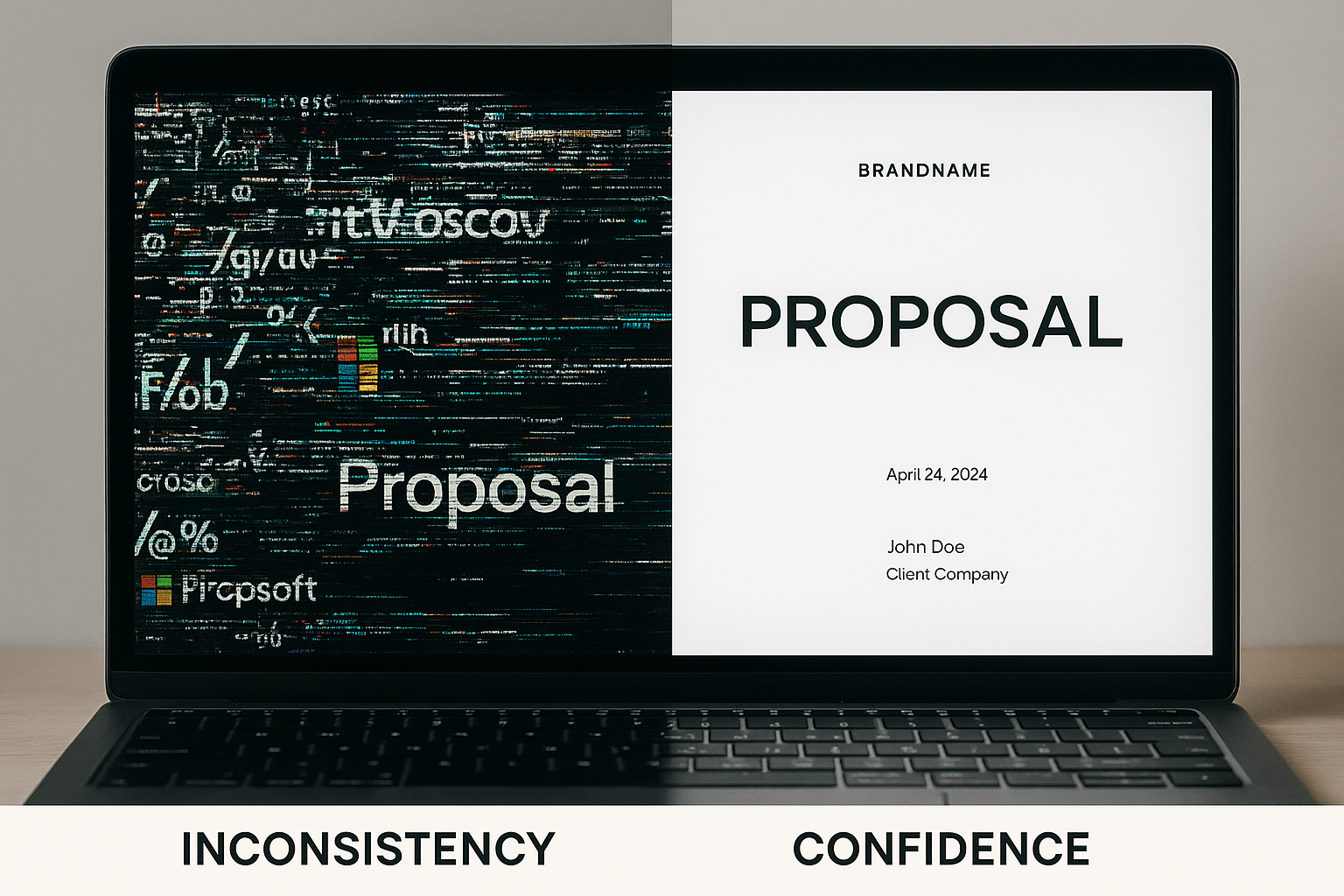
The logo is pixelated. The font is wrong. The spacing is off. And somewhere on page 14, there's still a reference to last year's product name.
Marketing is furious. Sales is defensive: "We needed to move fast. The buyer was waiting."
And so the cycle repeats: marketing demands control, sales demands speed, and every proposal becomes a negotiation between the two.
Here's the uncomfortable truth: you shouldn't have to choose.
The False Trade-Off
Most organizations operate under a flawed assumption:
Brand consistency = Slow, rigid processes
Speed = Inconsistent, off-brand chaos
So they pick a side. Both paths lose:
Option A kills velocity: Lock down templates, require marketing approval, sacrifice speed. This frustrates sellers and stalls deals.
Option B erodes trust: Give reps freedom to move fast, accept brand degradation. This confuses buyers and weakens positioning.
The real question isn't which to choose. It's why are you being forced to choose at all?
The Brand Impact: Research shows that consistent brand presentation can increase revenue by up to 23¹. Conversely, inconsistent visuals confuse buyers, eroding the trust that 81% of customers require before making a purchase².
What Breaks Brand Consistency
Inconsistency isn't intentional. It's structural. Here's where things go wrong:
- Templates Live in Silos
Marketing creates "approved" templates in PowerPoint or Google Slides. Sales copies them to personal drives and edits freely. Within weeks, 15 different versions circulate, none matching the original. - Manual Copy-Paste Workflows
Reps pull content from last quarter's deck. Formatting breaks when pasting between documents. Fonts revert to default. Logos lose resolution. Colors shift. - No Version Control
Which template is current? Which case study is approved? Nobody knows, so everyone guesses and guesses wrong. - Customization Chaos
Every deal feels unique, so reps "tweak" templates. Tweaks compound into Franken-docs that barely resemble the brand. - Lack of Governance
Marketing doesn't see proposals before they go out. Sales doesn't ask permission, it's faster to apologize later. By the time brand violations surface, deals are already in flight.
Quick Self Check: Is Your Brand Leaking?
If you answer "yes" to two or more, your brand consistency is broken:
☐ You've seen a proposal with the wrong logo, font, or color scheme in the last 30 days
☐ Marketing doesn't review proposals before they're sent
☐ Reps copy-paste from old decks instead of using templates
☐ You have multiple "approved" templates floating around
☐ Buyers have asked, "Is this really from your company?"
The System That Delivers Both: Speed AND Consistency
The teams that win don't sacrifice one for the other. They build systems where brand consistency enables speed. Companies with active brand management programs achieve significantly higher marketing ROI.
Here's how:
- Lock the Structure, Free the Content
Stop: Giving reps editable templates they can break
Start: Locked templates with dynamic content zones
Fonts, colors, logos, and spacing are immutable. Reps can't "accidentally" break formatting. Content inserts into predefined zones automatically. - Centralize Approved Content
Stop: Reps hunting for "the latest" case study or slide deck
Start: Single source of truth for all brand-approved assets
Marketing uploads approved content once. Reps pull from the library, no copy-paste required. Updates propagate automatically across all active proposals. - Automate Proposal Assembly
Stop: Manual copy-paste from old decks
Start: Template-driven generation
Reps answer intake questions (industry, use case, deal size). A system assembles the proposal using approved, on-brand blocks. Formatting is pixel-perfect every time. - Build Smart Customization Rules
Stop: Reps "tweaking" templates for every deal
Start: Logic-driven personalization
Case studies auto-select based on buyer industry. Pricing tables insert dynamically based on deal parameters. Reps get personalization without breaking the brand. - Govern Without Gatekeeping
Stop: Marketing as the bottleneck for every proposal
Start: Automated governance with visibility
Marketing pre-approves all content in the library. Proposals built from approved blocks need no additional review. Marketing tracks usage and performance via dashboards. Only custom requests escalate for manual approval.
💡 The Efficiency Gain: Companies that leverage technology for brand governance and centralized content have reported significant results, with 68% seeing revenue growth of 10% or more³.
What It Looks Like in Practice
|
Feature |
Old Way (Pick Your Poison) |
New Way (Speed + Consistency) |
|
Path A (Control) |
Proposal delivered 7 days later, buyer has moved on. |
System generates on-brand proposal in minutes. |
|
Path B (Chaos) |
Logo is wrong. Font is outdated. Pricing is stale. Buyer questions credibility. |
Logo, fonts, colors are locked and perfect. Case studies and pricing insert automatically. |
|
Marketing Role |
Firefighting over rogue proposals, acting as the approval bottleneck. |
Setting the content rules, seeing usage analytics, not approval queues. |
The Compounding Benefits
When you solve for both speed and consistency:
- For Sales: Proposals go out in hours, not days. No hunting for approved assets. No post-send panic about brand violations.
- For Marketing: Brand is protected automatically. Visibility into what content performs best. Consistent use of color alone can boost brand recognition by up to 80%⁵.
- For Buyers: Every interaction reinforces trust and professionalism. Clear, consistent messaging accelerates decision-making.
- For Leadership: Revenue velocity increases. Brand equity strengthens. Cross-functional friction disappears.
The Revenue Impact
|
Scenario |
Average Proposal Cycle |
Win Rate |
Revenue (100 Ops @ $50K) |
|
A: Brand Control (Slow Process) |
7 days |
35% (on-brand, but slow) |
$1.75M |
|
B: Speed Priority (Inconsistent Brand) |
2 days |
30% (fast, but inconsistent messaging) |
$1.5M |
|
C: Speed + Consistency (Orchestrated System) |
2 days |
45% (fast AND on-brand) |
$2.25M |
That's a $500K+ lift compared to the "pick your poison" paths.
Your Next Steps
Stop negotiating between speed and consistency. Start building systems that deliver both:
- Audit Brand Leakage: Pull the last 10 proposals sent. Score them for common violations (fonts, logos, colors).
- Centralize Approved Assets: Create a single, tagged repository for templates, case studies, and slides. Deprecate old content.
- Lock Formatting, Automate Content: Build templates with immutable structure. Use variables to insert content dynamically.
- Measure Both Metrics: Track proposal cycle time (speed) and brand compliance rate (consistency). Report both in every leadership review.
Because brand consistency shouldn't slow you down. And speed shouldn't trash your brand. When the system works, you get both.
See how Talewind delivers speed and brand consistency in every proposal