·
6 minute read
·
6 minute read
Choosing the right solution is not just about comparing proposal software tools. It is about what kind of proposal process you are trying to improve.
If your team sends relatively simple, repeatable proposals and wants a polished, easy-to-use platform, Proposify may be a strong fit. If your team spends its time building highly customized proposals, statements of work, contracts, and pricing packages - with multiple layers of complexity - Talewind is built for that world.
This article is an educational overview of both platforms, who they are best for, and how Proposify and Talewind really serve two different markets.

Proposify: A Design-Forward Platform for Streamlined Proposals
Proposify is a well-established proposal platform designed to create visually polished proposals quickly and consistently. With a large library of designed templates and an intuitive drag-and-drop editor, the platform makes it easy for sales teams to move the typical Word document process online, where they can build interactive, branded proposals that are delivered through a clean web-based experience. By combining strong visual presentation with engagement tracking, e-signatures, and collaboration tools, Proposify helps organizations simplify the proposal process while giving buyers a modern and easy-to-navigate experience.
Who Proposify Is Best For
Proposify is a strong choice for companies that need to improve proposal quality and simplify proposal creation without introducing a highly technical or operationally complex system.
In general, Proposify makes sense for:
-
agencies and creative firms
-
marketing and advertising teams
-
professional services firms with standardized offerings
-
software companies selling repeatable packages
- SMB sales teams that want fast, polished proposals
If your proposals are relatively simple, visually important, and follow a consistent structure from one deal to the next, Proposify can be a very practical solution.
What Proposify Does Well
One reason Proposify has become so recognizable in the proposal software space is that it solves a real and common problem: too many sales teams are still building customer-facing documents in outdated, inconsistent ways.
Proposify improves that experience through a set of features designed for usability and presentation.
1. A visual document builder
Proposify's drag-and-drop editor allows teams to assemble proposals using templates, content blocks, images, videos, and pricing tables. For organizations that want design control and branded consistency, this can be a major advantage.
2. Content libraries and reusable sections
Teams can store bios, case studies, messaging, and pricing snippets so sales reps are not starting from scratch every time. These can be easily dropped onto the editing canvas from content folders you can access while editing the document.
3. Interactive pricing tables
Proposify's pricing tables allow buyers to select add-ons, change quantities, and see totals update in real time. For straightforward services or packaged offerings, that can create a cleaner and more engaging buying experience.
4. E-signatures, payments, and analytics
The ability to review, sign, and even pay within the same experience is a meaningful strength. Proposify also gives teams visibility into when proposals are opened and which sections buyers spend time reviewing.
5. A smooth buyer experience
For simple to moderately complex deals, Proposify offers a modern, polished way to move from proposal to signature without forcing buyers through a fragmented process.
Where Proposify Starts to Reach Its Limits
Because Proposify focuses on simplifying proposal creation through templates and visual editing, it tends to work best for organizations with repeatable offerings and relatively straightforward proposals that don’t require a high level of customization or editing.
For companies with more complex sales processes, some of Proposify’s limitations can begin to appear.
1. Limited depth for complex proposal scoping
Organizations with complex proposals that involve many variables may find the manual assembly process time-consuming and difficult to standardize.
For example, let’s say your proposal includes a specific clause that only applies to a certain product category. You’ll have to remember which clause to reference and manually drag-and-drop it into your proposal for the corresponding product category. Applied to several clauses, product categories and sales reps, this becomes difficult to manage.
2. Basic pricing capabilities compared to advanced CPQ systems
Proposify includes interactive pricing tables that work well for straightforward pricing models.
But for organizations that require more sophisticated pricing structures—such as multi-layered services, resource allocation, or complex cost calculations—these tables may not provide the depth needed to automate pricing accurately.
In these cases, pricing decisions often still rely on spreadsheets or manual calculations outside the platform.
3. Fully DIY proposal management
Proposify offers an excellent onboarding and overall CSM experience, but still follows a traditional DIY SaaS model, meaning the responsibility for administration of the platform falls primarily on the customer.
Teams must manage their own templates, update the content library and troubleshoot formatting or proposal issues internally.

Talewind: Proposal Orchestration for Complex Services
Talewind is designed for organizations where proposals are more than simple documents. They are complex, high-stakes deliverables that require coordination across teams, detailed scoping, and precise pricing. Built for services businesses with sophisticated sales processes, Talewind helps transform proposal creation from a time-consuming manual effort into a structured, automated workflow. By combining logic-driven proposal generation, pricing configuration, and guided deal scoping, Talewind enables teams to produce highly customized proposals faster while maintaining accuracy, consistency, and governance across the organization.
Who Talewind Is Best For
Talewind is built for organizations whose proposal process has already outgrown traditional template tools.
 That often includes companies in:
- IT services and managed services
- Business and consulting services
- CROs and clinical research
- Manufacturing and engineered services
- Field services and project-based work
- Complex B2B consulting environments
- Enterprise sales teams with multi-stakeholder deals
These are organizations where proposals often include a mix of narrative content, legal terms, pricing logic, service configuration, supporting documents, and internal review steps.
More importantly, they are organizations where proposal creation is expensive. It consumes seller time, ties up SMEs, introduces risk, and slows down revenue.
Talewind is designed for those teams.
What Talewind Does Well
Instead of focusing primarily on document editing and presentation, Talewind focuses on automating the complex operational work that goes into building proposals.
Once the Talweind platform has been configured, practically all of the document assembly is handled within the platform.
Talewind is a better if your process entails any combination of the following:
- deep scoping
- copious amounts of editing and writing
- coordination across multiple teams
- pricing or content that is irregular, custom or bespoke
1. Logic-driven assembly instead of manual drag-and-drop
Talewind replaces manual document assembly with a question-driven workflow.
Sales reps answer a set of questions about the deal — such as project scope, client type, delivery model, or timeline. Questions may have layers of follow-ups, depending on the depth and complexity of your sales documentation.
Talewind then automatically assembles the proposal using the correct content, clauses, and structure.
2. Advanced pricing and CPQ-style calculations
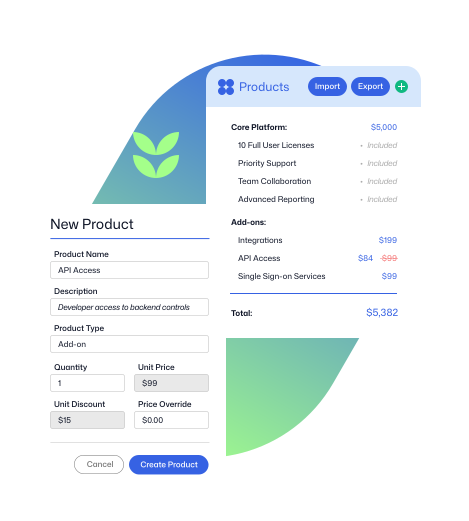 Many complex proposals require far more than a simple pricing table. Talewind includes a pricing engine capable of handling complex cost structures, such as:
- Hourly labor calculations
- Material costs
- Margin guardrails
- Bundled service pricing
- Excel-style formulas and calculations
This allows finance teams to enforce pricing standards while still allowing sales teams to configure deals quickly and accurately.
3. Centralized subject-matter expertise
In many organizations, proposals require input from legal, finance, engineering, operations, and marketing teams.
Talewind helps centralize that expertise by embedding pre-approved content and logic directly into the proposal generation system.
Instead of repeatedly asking SMEs for help, the knowledge they previously provided is built into the system — allowing sales teams to generate accurate proposals without repeatedly pulling experts into every deal.
4. Managed SaaS implementation and support
Talewind also differs from most proposal software in how it is implemented and maintained. Rather than a purely DIY software model, Talewind operates as a Managed SaaS platform, where Talewind helps customers:
- Design and build document templates
- Build and manage a robust content library
- Design proposal workflows
- Configure pricing logic
- Update content and templates year round
- Optimize the system over time
For organizations that do not want to dedicate internal resources to managing proposal infrastructure, this can be a significant advantage.
5. Dynamic Buyer Showrooms
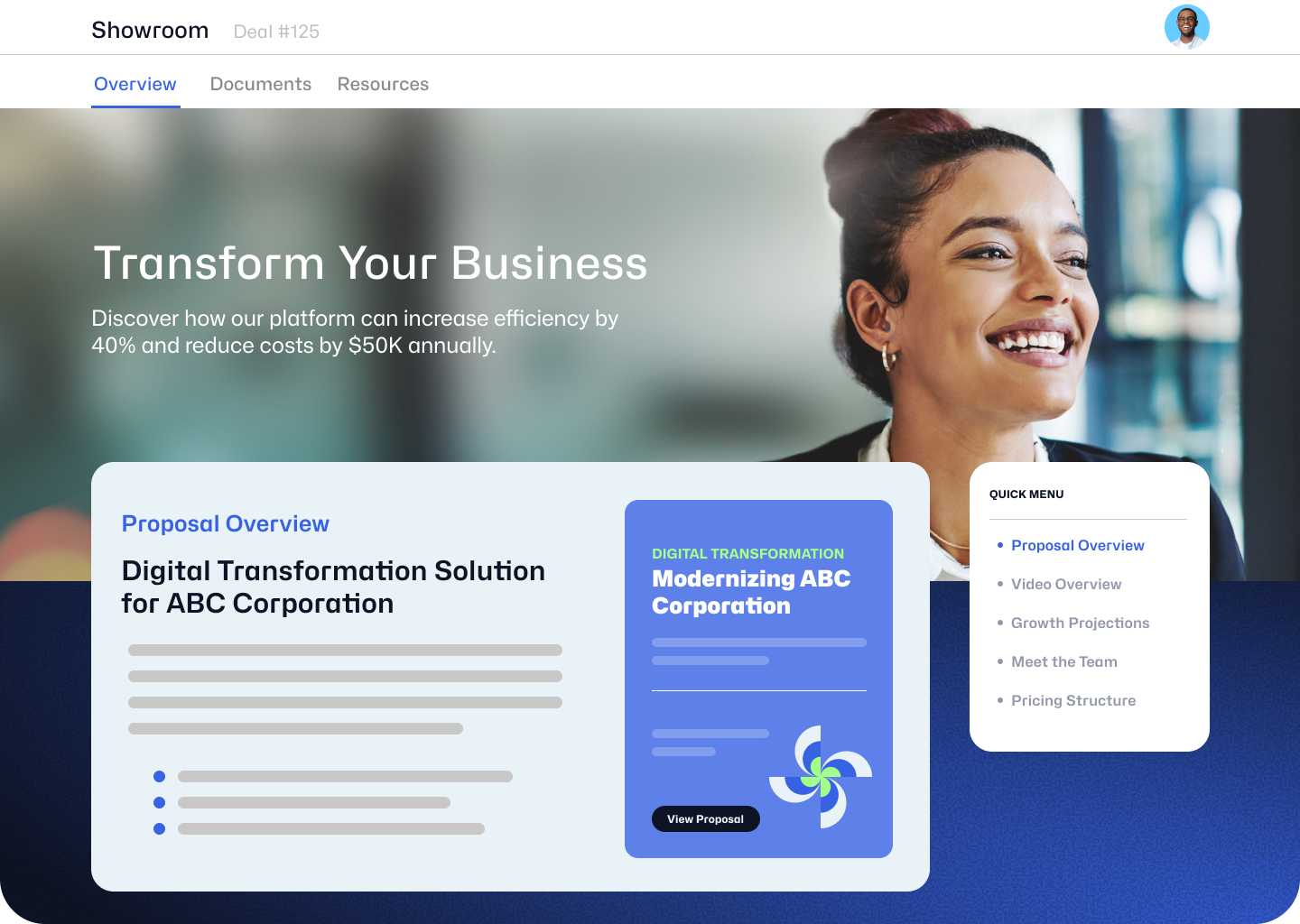
Talewind dynamically generates Buyer Showrooms for every deal from the ground up. The question-driven workflow automatically assembles a fully immersive, personalized workspace. Each Showroom is configured for that specific opportunity, pulling in the exact mix of custom branding, stakeholder videos, and commercial documents based on the deal's parameters. This reframes the DSR from a simple document-hosting link into a highly configured, confidence-building buyer experience.
Where Talewind Starts to Reach Its Limits
While Talewind is powerful for complex proposal environments, it is not designed to be the right solution for every sales team.
Because Talewind focuses on solving operational complexity, it tends to be most valuable for organizations whose proposal process is already complex and resource-intensive.
For companies with simpler sales processes, some of Talewind’s capabilities may be unnecessary.
1. Overkill for simple proposals
If proposals are highly standardized and require only minor customization, a simpler template-based editor may be sufficient.
Teams that only need to update client names, adjust pricing, and send proposals quickly may not need the deeper automation Talewind provides.
2. Best suited for higher-complexity organizations
Talewind delivers the most value when proposals involve:
- multiple stakeholders
- complex pricing models
- legal or regulatory considerations
- highly customized scopes of work
Organizations that do not face these challenges may not fully benefit from Talewind’s more advanced capabilities.
3. Managed SaaS instead of DIY administration
Because Talewind builds logic, pricing structures, and workflows into the system, the initial setup process involves mapping how proposals are created across the organization.
For companies willing to invest in improving their proposal infrastructure, this can produce significant long-term benefits. But it does mean Talewind is less of a “plug-and-play” tool than simpler SaaS platforms. For some this is massive value add, but for those looking to sign up for a SaaS tool and do things entirely themselves, Talewind may not be the right fit.
4. Designed for structured processes
Talewind works best when organizations want to bring structure, governance, and repeatability to their proposal process.
While Talewind certainly offers full editing tools in the documents, ompanies that prefer highly ad-hoc proposal creation or completely free-form document editing may find the structured workflow less flexible than a traditional document editor.
5. Higher investment than basic SaaS tools
Talewind is typically more expensive than lightweight SaaS proposal tools like Proposify. Because Talewind includes advanced automation, pricing logic, and managed services support, it represents a larger investment than simple template-based platforms designed for straightforward proposals.
So Are Proposify and Talewind Competitors?
In a broad software category sense, yes — both live somewhere in the proposal and buyer-experience conversation.
But in practical market terms, they are not really competitors, since they are solving different levels of the problem.
Proposify is a software platform used to create simpler, more repeatable proposals with an easy-to-use online editor and content library.
Talewind is a service and a software platform used to orchestrate and automate complex, high-effort proposals that once took hours or days to complete.
Both platforms deliver real value—but they solve different problems. Choosing the right solution is not just about comparing proposal software tools. It is about understanding the complexity of your sales cycle and identifying what kind of proposal process you are trying to improve.